
Where NRL Betting Actually Stands in New Zealand in 2026
 Available in US
Current as of 26 October 2026, checked against the Racing Industry Act 2020 (as amended) and TAB New Zealand’s own published terms.
Rugby league in Australia has a long shadow across the Tasman, and NRL betting in New Zealand has always lived inside it. The Warriors draw a New Zealand audience through every round, State of Origin splits the country for three nights of winter, and the September final series turns casual viewers into punters for a few weekends each year. The wrinkle in 2026 is that the local market no longer looks the way it did a decade ago. Since the Racing Industry Amendment Act 2025 took effect on 28 June 2025, TAB New Zealand — operating its two online brands, TAB and Betcha — is the only provider lawfully permitted to take racing and sports bets from a person in New Zealand. That single change reshapes the question this page answers, because the answer used to be “pick the bookmaker with the best price”. The answer now is closer to: pick the only lawful bookmaker, then judge it honestly on what it offers.

This guide works through that reality in plain language. It explains what the NRL season looked like in 2026, which paths exist for someone in New Zealand who wants a wager on it, and what each path actually delivers. TAB and Betcha are covered as a single operation running two apps. Eight offshore bookmakers that New Zealand players encounter in marketing or through search results are rated against the same criteria, with the licence position stated plainly each time. The legal frame sits beside the practical one, because in New Zealand the two are the same conversation: there is only one lawful set of betting tools with harm-minimisation oversight, and there is the rest. The reading order below follows that logic.
Table of Contents
- The 2026 NRL Season in Numbers
- The Path New Zealand Bettors Can Actually Take
- The Statutory Frame Around the Bet
- What “Not Licensed in New Zealand” Actually Means
- Responsible Gambling and Where Help Sits
- The Top 10 Reviewed Bookmakers
- TAB
- Betcha
- Telbet
- BetAlright
- Roobet
- Winz.io
- Golden Panda
- FunBet
- Rabona
- Alawin
- What NRL Betting Markets Actually Look Like
- How Odds Build a Price
- Bet Types Punters Use on the NRL
- Strategy, Tips and the Bond of Punters’ Forecasts
- The Read of the Season
- Where the Limits Operate
- Reading the Calendar and the Bonus Bets
- What the Numbers on the Scoreboard Tell the Punter
- The Pricing of an NRL Match
- What a Winning Bet Pays Back
- The Punter’s Take on the NRL in New Zealand
- Frequently Asked Questions
The 2026 NRL Season in Numbers
The 2026 NRL Telstra Premiership was the 119th season of top-flight rugby league in Australia and ran from 28 February to 4 October 2026 across 17 teams. Penrith Panthers came in as the side that had set the standard in recent seasons and finished as minor premiers on the ladder. The Sydney Roosters ultimately lifted the trophy at Accor Stadium on the first weekend of October, beating the Newcastle Knights in the decider to claim their 16th premiership. For New Zealand audiences the headline act was the New Zealand Warriors’ campaign, watched with the same mix of hope and resignation the club has long trained its supporters in.
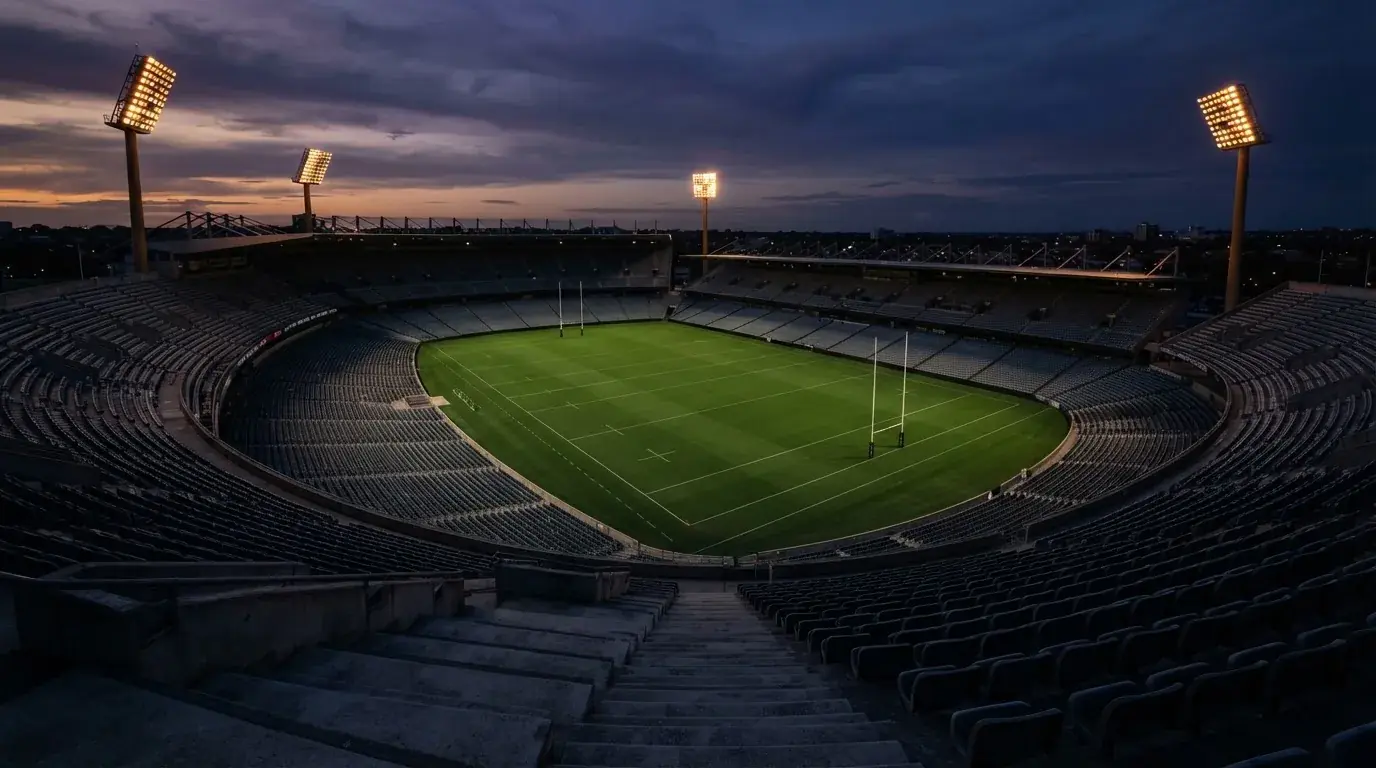
The NRL finals series takes the top eight teams on the ladder and runs through qualifying finals, elimination finals, semi-finals, preliminary finals and the grand final over four weekends. This structure provides the deepest market liquidity for bookmakers, and TAB NZ’s NRL markets sit alongside rugby union and racing on its app, with both pre-match and in-play pricing across the regular season and the finals series.
The Path New Zealand Bettors Can Actually Take
Two doors and one wall. TAB and Betcha are the doors — same operator, two apps, two brand presentations. The wall is the Racing Industry Amendment Act 2025, which inserted section 74AAA into the Racing Industry Act 2020: no person other than TAB NZ may offer racing betting, sports betting or other racing or sports betting to a person in New Zealand, regardless of where that person is resident or incorporated. The change took effect on 28 June 2025, and the Department of Internal Affairs told providers serving New Zealand to withdraw with immediate effect.

That is not a marketing slogan. It is the structure of the local market. There is no licensing route for another bookmaker, no licence register for betting, because there is only one lawful provider. TAB NZ’s partner Entain runs the TAB business under a 25-year agreement signed in 2023, with a 50/50 share of gross profits, at least $150 million a year going to TAB NZ for the first five years, and a one-off $100 million payment to the racing sector. The point of those numbers is not the deal itself but what it confirms: TAB NZ’s monopoly is structural, not provisional, and the offshore brands a New Zealand punter meets online are not awaiting a licence that may arrive later.
This means the path is clear. If you are in New Zealand and want to back the Warriors to win on Saturday night, the only way to do it through a regulated, New Zealand-account, harm-minimisation-equipped app is through TAB or Betcha. The offshore bookmakers reviewed further down take bets from many countries and price NRL markets competitively — Telbet, Roobet, FunBet, Ivibet and the rest all carry rugby league markets. None of them has a New Zealand licence, none offers New Zealand dispute resolution, and none is bound by the safer-gambling tools and problem-gambling levy that TAB NZ operates under.
The Statutory Frame Around the Bet
Three pieces of legislation and one regulator frame every wager placed through TAB NZ. The Gambling Act 2003 sets the broader gambling regime, with the Department of Internal Affairs (DIA) as the regulator that monitors compliance with the betting prohibition. The Racing Industry Act 2020 establishes TAB NZ as the sole betting provider for racing and sports in New Zealand, and the Racing Industry Amendment Act 2025 closed the door on the offshore supply of bets to New Zealand residents. Section 92A of the Racing Industry Act is the compliance hook DIA monitors; section 74AAA is the substantive prohibition on anyone else taking bets. Section 89 makes betting under 18 an offence — the age for TAB NZ betting is 18, not 20 as it is at land-based casinos.
The Online Casino Gambling Act 2026 is a separate regime. It licenses online casino gambling only and does not extend TAB NZ’s sports-betting monopoly; TAB NZ winning the right to apply for a casino licence under that law does not change anything about who can take sports bets. Greyhound racing is closing in stages from 1 August 2026, and from that date offshore operators may not take bets on greyhound races either.
What may be bet on is also framed by these statutes. TAB NZ takes fixed-odds and tote (pool) bets on racing and sports. Its published betting rules set out the bet types — Win, Place, Each Way, Quinella, Exacta, Trifecta, First Four, Double, Treble, Daily Double, Running Double, Quaddie, Big6, plus Multis and Same Game Multis (a multi whose legs come from one event). Live betting is listed in the TAB NZ apps; no statutory restriction on in-play markets was found. There is no statutory per-bet cap; stake limits are TAB NZ’s own terms. Bets on politics and novelty markets are not established as part of TAB NZ’s published product. There is no lawful New Zealand betting exchange, and spread betting is outside TAB NZ’s sports-betting definition.
Player protection is built into TAB NZ’s account opening. TAB NZ accounts require a verified New Zealand address and ID. The safer-gambling tools in the TAB NZ app are deposit limits, time-outs and self-exclusion, and an exclusion applies across both TAB and Betcha. TAB NZ pays a Problem Gambling Levy of 0.74% of its betting revenue, in force from 1 July 2025 to 30 June 2028. The free Gambling Helpline on 0800 654 655 and the text line 8006 are the help routes every punter in New Zealand can use, whether their account is with TAB NZ or with an offshore brand.
For the player, Inland Revenue guidance is that recreational gambling winnings are generally not taxable and prize money from TAB horse, dog and trotting races is not taxable. A person who bets as a business is a different case — that is general information, not tax advice, and the right path is to consult Inland Revenue or an accountant. TAB NZ itself pays the Problem Gambling Levy. Overseas operators supplying New Zealand residents pay online gambling duty — 12% of profits since 1 July 2024, rising to 16% from 1 January 2027 — but a duty being payable does not make an offer lawful, and the page never writes that paying tax shows a bookmaker is legal. The point-of-consumption charge on offshore racing and sports bets ceased on 30 June 2026.
What “Not Licensed in New Zealand” Actually Means
New Zealand law targets the operator, not the player. Section 19(4) of the Gambling Act 2003 (inserted in 2025) says an individual may not be convicted for placing a bet with an offshore betting operator in breach of section 74AAA, and no source states a penalty for a player. New Zealand does not geo-block bookmaker sites. The legal exposure sits on the offshore operator: an overseas bookmaker taking sports or racing bets from a person in New Zealand is breaking New Zealand law, and DIA has told providers to do so with immediate effect. The penalty for breaching section 74AAA is not stated in the section, and no prosecution of an offshore bookmaker was found.
What this means for a New Zealand punter is honest framing, not a slogan. TAB NZ and Betcha are the only lawful option, with New Zealand harm-minimisation tools, regulator oversight and a complaints framework. Offshore brands are unlawful for the operator to serve New Zealand, carry no New Zealand complaints route, and the Department of Internal Affairs warns that overseas operators may be in minimal-safeguard jurisdictions, may not return unspent credits, and may not pay out large wins. Neither is “the safe choice” by default. The choice is between a New Zealand-licensed operator with harm-minimisation oversight and offshore brands that may be more familiar to an experienced punter but operate under different rules and different consumer protection.
Responsible Gambling and Where Help Sits
The responsible-gambling frame is built into TAB NZ’s product rather than added on. Deposit limits, time-outs and self-exclusion are the three tools listed in the TAB NZ app, and an exclusion applies across both TAB and Betcha — a punter who has self-excluded from one cannot simply open the other. The Problem Gambling Levy of 0.74% funds harm-minimisation work, and Safer Gambling Aotearoa is the body that runs many of the public-facing programmes. The Gambling Helpline on 0800 654 655 (text 8006) is free and available to anyone in New Zealand, regardless of which operator they bet with. There is no single national online-betting exclusion register; the register the casino law will require is for online casinos only, and does not extend to TAB NZ sports betting.
The page is not a place to urge anyone to bet, and the responsible-gambling section is not a softener for what comes before it. The point is practical: anyone reading this who is betting more than they can afford to lose, or betting to recover a loss, has a free, immediate, confidential route to a trained counsellor, and the help line is the same regardless of which bookmaker is on screen. The offshore brands reviewed below have no equivalent in New Zealand. Some of them carry their own self-exclusion at the site level, but those tools are bound to the offshore operator’s own licence regime and offer no New Zealand dispute resolution if a payout is withheld.
The Top 10 Reviewed Bookmakers
The list below puts the two lawful New Zealand brands first, then eight offshore brands that New Zealand players encounter in marketing or through search results. TAB and Betcha are the same operator group — both are online brands of TAB New Zealand, run by Entain — and are never treated as rivals. The offshore brands are rated by the same criteria as the local pair, but the licence position is stated plainly each time: only TAB NZ may lawfully offer racing and sports betting to people in New Zealand under section 74AAA. Reading the offshore set is not a recommendation to use it. It is a comparison that lets a New Zealand punter who has already chosen an offshore brand — perhaps from years of habit — see how that brand compares on product depth, market coverage, app quality and safer-gambling tooling.
| Brand | New Zealand status | What the operator’s own terms state on the key’s subject |
|---|---|---|
| TAB | TAB NZ brand | Pre-match and live markets on NRL, racing, rugby union; deposit limits, time-outs, self-exclusion in the app; 18+ account opening with verified NZ address and ID; Problem Gambling Levy funded |
| Betcha | TAB NZ brand | Sports and racing app, NRL listed alongside NBA, NFL, MMA/UFC, cricket, football, motorsports, esports; same harm-minimisation tools as TAB under the TAB NZ group |
| Telbet | Not licensed in New Zealand | Crypto casino and sportsbook; welcome offer of 200% up to 1 BTC plus 50 free spins and a 5 USDT free bet on its Russian-language site |
| BetAlright | Not licensed in New Zealand | Sportsbook covering football, tennis, table tennis, basketball, ice hockey, American football and baseball, with Live Betting and Virtual Sports sections |
| Roobet | Not licensed in New Zealand | Sportsbook covering soccer, basketball, tennis, Counter-Strike, FIFA, baseball, ice hockey, MMA and table tennis; 18+ terms; Curaçao-licensed holder Raw Entertainment B.V. |
| Winz.io | Not licensed in New Zealand | Sports betting bonus promotion with a separate Sportsbook T&C, Sports Rules and Bonus Terms and Conditions pages; Anjouan and Tobique-licensed holder Novatrix SRL |
| Golden Panda | Not licensed in New Zealand | Sports section with sportsbook, esports and virtual sports, plus casino, live casino, crash games, rewards, cashback, VIP Club, Golden Goals and Prediction Markets |
| FunBet | Not licensed in New Zealand | Sportsbook offering odds on football, ice hockey, American football, basketball, volleyball, tennis, rugby and baseball, with live betting and a bookmaker described as open 24/7 |
| Rabona | Not licensed in New Zealand | Sportsbook from Soft2Bet, launched 23 December 2019 as the group’s sixth online sportsbook; Curaçao-licensed |
| Alawin | Not licensed in New Zealand | Sportsbook covering football, tennis, table tennis, basketball, ice hockey, American football and baseball, with Live Betting, Virtual Sports and esports |
TAB
TAB is the main brand of TAB New Zealand and the only lawful online sports and racing bookmaker in New Zealand under section 74AAA. The TAB NZ app — “TAB – Racing & Sports Betting” on the New Zealand App Store — covers horse and harness racing, rugby union and rugby league and other sports, pre-match and live, and carries a 17+ App Store age rating while stating that customers must be 18 or over to bet. The app first released on 8 September 2014 and sits behind a verified New Zealand address and ID. Inside the app, Trackside live race streaming runs with in-app betting, racing form, Blackbook and Jockey Challenge tools, and a simplified wallet for deposits and withdrawals. The product is the everyday working interface for most New Zealand NRL punters.
On product depth, TAB NZ prices NRL markets across the regular season and the finals series, with head-to-head, line, totals and Same Game Multis as standard, and racing form tools that double as live information for rugby league markets. The safer-gambling tools are deposit limits, time-outs and self-exclusion, with self-exclusion applying across both TAB and Betcha. The Problem Gambling Levy funds harm minimisation, and the 0800 654 655 helpline and 8006 text line are advertised in the app. The account opening is verified NZ address and ID, which gives New Zealand dispute resolution through TAB NZ’s own complaints framework.
The honest case against TAB is the obvious one: it has no rival. The lack of competition is structural, not a marketing choice, and the result is that the price on a Warriors-head-to-head market is whatever TAB NZ sets it at. TAB NZ’s published betting rules and its markets list come only from its own terms — there is no rival bookmaker for a punter to compare against, and no regulator-imposed pricing benchmark. For a New Zealand punter who values the regulated framework, the harm-minimisation tools and the verified account, TAB is the natural fit and the only lawful option. The page reads it that way.
Betcha
Betcha is the second online brand of TAB NZ, run by Entain New Zealand Limited, and was first released on 6 August 2024. The product is presented as a sports-and-racing app with a younger look than TAB, and the markets list is where it differs visibly: horse, greyhound and harness racing, plus rugby, NRL, MMA/UFC, NBA, NFL, tennis, cricket, football, motorsports and esports. NRL sits on the sports menu alongside the codes that matter to a New Zealand audience. The safer-gambling tools and account opening are the same as TAB’s, because Betcha and TAB are the same operator group.
The case for Betcha over TAB is mostly presentation: a cleaner sports-first layout, a sharper live-market interface, and a brand that does not carry TAB’s racing-tote heritage on the front page. For a punter who bets primarily on NRL and the major codes and rarely plays a Quinella or a First4 on the trots, Betcha is the friendlier daily-driver. The case against Betcha is the same as the case against TAB in the only dimension that matters locally: there is no price competition. Betcha’s prices are TAB NZ’s prices, set by the same trading desk, and the markets list and the limits are the TAB NZ group’s.
The honest assessment is that Betcha is TAB in a different wrapper. For a New Zealand punter who wants the regulated framework, the harm-minimisation tools and an NRL-focused sports product, Betcha is the right starting point. For a punter who plays racing form seriously and wants Blackbook and Jockey Challenge on the home screen, TAB is the right starting point. Switching between the two is a single-account operation, not a switch of operator.
Telbet
Telbet describes itself as a crypto casino and sportsbook, with a welcome offer of 200% up to 1 BTC plus 50 free spins and a 5 USDT free bet on its Russian-language site. The licence position is plain: Telbet is not licensed in New Zealand. Section 74AAA of the Racing Industry Act 2020 prohibits any person other than TAB NZ from offering racing or sports betting to a person in New Zealand, and Telbet names no licence that applies in New Zealand. There is no New Zealand complaints route and no harm-minimisation framework that reaches it.
Telbet’s product depth on NRL is not established from the inputs; what is established is its overall framing as a crypto sportsbook, which means deposits and withdrawals in cryptocurrency and price discovery against the broader offshore market. The crypto angle has a real appeal for an experienced punter who already holds bitcoin or USDT and wants to settle bets without a bank rail. The same angle has two costs: no New Zealand dispute resolution, and an exposure to the credit-not-returned and large-win-not-paid risks DIA warns about for overseas operators.
Telbet suits a punter who already uses offshore crypto sportsbooks for NRL betting, holds crypto on balance, and understands the consumer-protection gap. It does not suit a New Zealand punter who wants the regulated framework, the harm-minimisation tools and the New Zealand dispute resolution. The page reads it that way and does not recommend signing up.
BetAlright
BetAlright covers football, tennis, basketball, ice hockey, American football and baseball, with Live Betting and Virtual Sports. Licence: NOT licensed in New Zealand. Section 74AAA prohibits this. No New Zealand complaints route or harm-minimisation framework applies here. Rugby league is not explicitly listed.
The product depth on the codes BetAlright does cover is what a New Zealand punter comparing it to the TAB NZ pair is buying: a sportsbook with live betting and virtuals, and a wider international fixture list than TAB NZ’s local-focused offering. For a punter who bets on football and tennis, BetAlright is in the running against the wider offshore market. Yet, for a punter whose priority is NRL, BetAlright is not a serious alternative.
The honest assessment: BetAlright is an offshore sportsbook outside New Zealand’s regulated frame, with the live-betting and virtuals depth typical of that segment. It suits a punter betting on the codes BetAlright lists; it does not suit a New Zealand punter who wants NRL coverage through a New Zealand-licensed operator. The TAB NZ pair remain the only lawful option.
Roobet
Roobet’s sportsbook covers soccer, basketball, tennis, CS, FIFA, baseball, ice hockey, MMA and table tennis. This brand is not authorised to operate in New Zealand. Section 74AAA applies. Its Curaçao licence (OGL/2024/687/0427) provides no legal basis to accept New Zealand-based wagers. No New Zealand-based complaints mechanism exists for this operator. Rugby league is not explicitly listed in its markets.
Roobet is well-known in the crypto-casino and sportsbook space, with a product presentation that leans on esports and North American codes. For a New Zealand punter betting on Counter-Strike, FIFA and basketball, Roobet is an option within the wider offshore market. Yet, for a punter prioritising NRL, Roobet is not a serious alternative.
The honest assessment: Roobet is an offshore crypto sportsbook with a Curaçao licence, well-established in esports and the major North American codes. It suits a punter betting on the codes Roobet lists and comfortable with the offshore consumer-protection gap. It does not suit a New Zealand punter who wants NRL coverage through a New Zealand-licensed operator. The TAB NZ pair remain the only lawful option.
Winz.io
Winz.io offers a sports promotion with its own T&C. The operator is not licensed to provide betting services in New Zealand. Section 74AAA applies. Its Anjouan/Tobique licences provide no authority to target New Zealand bettors. No domestic complaints or harm-minimisation support is available. NRL coverage is not confirmed.
Winz.io’s product presentation is built around its bonus-promotion structure, which is the kind of operator-level marketing weight that can deliver headline-friendly offers but carries standard offshore caveats. For a punter chasing a specific promotion that suits their staking plan, Winz.io is in the running. For a punter whose focus is NRL betting, Winz.io is not a serious alternative.
The honest assessment: Winz.io is an offshore sportsbook with a bonus-promotion-led product, holding Anjouan and Tobique licences. It suits a punter optimising for a specific promotion. The TAB NZ pair remain the only lawful option.
Golden Panda
Golden Panda offers sports, esports, virtuals, casino, and live games. This entity holds no licence to offer betting in New Zealand. Section 74AAA prohibits this. No New Zealand-based complaints route exists for local users. NRL markets are not established.
Golden Panda is a multi-product operator, with the casino, live casino and crash games sitting alongside the sportsbook. For a punter who plays both casino and sports under one account and is comfortable with the offshore consumer-protection gap, Golden Panda is in the running. For a punter whose focus is NRL betting, Golden Panda is not a serious alternative.
The honest assessment: Golden Panda is an offshore multi-product operator with sportsbook, esports and virtuals, plus a wide casino offering, holding no New Zealand-applicable licence. It suits a punter who wants sports and casino under one offshore account.
FunBet
FunBet offers football, ice hockey, American football, basketball, volleyball, tennis, rugby and baseball with live betting. It is not licensed to operate in New Zealand. Section 74AAA applies to offshore service providers. No local complaints route or support framework is available. Rugby league is not explicitly confirmed.
FunBet’s product is the broad-market international sportsbook pattern: a long menu of codes, live betting around the clock, and a presentation designed for a multi-code punter. For a punter who bets across football, basketball and rugby, FunBet is in the running against the wider offshore market. Yet, for a punter seeking NRL markets, it is not a serious alternative, even though rugby is listed.
The honest assessment: FunBet is an offshore sportsbook with a long code list, holding no New Zealand-applicable licence, with no confirmed NRL coverage. It suits a punter betting on the codes FunBet lists and comfortable with the offshore consumer-protection gap.
Rabona
Rabona launched on 23 December 2019 as the sixth online sportsbook of the Soft2Bet group. The licence position: Rabona is not licensed in New Zealand. Section 74AAA applies. Rabona holds a Curaçao licence, which gives no right to take bets from people in New Zealand. NRL coverage on Rabona is not confirmed.
Rabona sits inside a multi-brand group with a long history in the offshore sportsbook space, and its product presentation is built around sports and casino under one account. For a punter who already uses a Soft2Bet brand and is comfortable with the group’s product, Rabona is in the running. For a punter whose focus is NRL betting, Rabona is not a serious alternative.
The honest assessment: Rabona is an offshore sportsbook from the Soft2Bet group, holding a Curaçao licence. It suits a punter already in the Soft2Bet group ecosystem.
Alawin
Alawin covers football, tennis, basketball, ice hockey, American football and baseball, with live betting, virtuals and esports. The brand does not hold a licence to accept New Zealand bettors. Section 74AAA is applicable here. There is no New Zealand-facing support or dispute resolution. NRL markets are not established.
Alawin’s product pattern is the offshore sportsbook standard: a wide menu of codes, live betting, virtuals and esports under one account. For a punter betting on the codes Alawin lists, Alawin is in the running against the broader offshore set. For a punter whose focus is NRL betting, Alawin is not a serious alternative.
The honest assessment: Alawin is an offshore sportsbook with a wide code list and live, virtuals and esports, holding no New Zealand-applicable licence. It suits a punter betting on the codes Alawin lists and comfortable with the offshore consumer-protection gap.
What NRL Betting Markets Actually Look Like
The NRL markets TAB NZ and the offshore set both price to a familiar shape. The base market is the head-to-head — which team wins the match — and it is the deepest market in terms of liquidity, especially on Warriors games and on the finals series. From there, line betting and handicap markets price the margin, with TAB NZ and the offshore brands publishing a spread for each match that reflects the team rankings, the venue and the recent form. Totals markets price the combined score, typically over or under a set number, and Same Game Multis (SGMs) let a punter combine legs from a single match — first try-scorer, total points, winning margin — into one multi.
The structure of an NRL final is the same markets priced harder, because the liquidity is deeper. The NRL finals series takes the top eight teams on the ladder and runs through qualifying and elimination finals, semi-finals, preliminary finals and the grand final. TAB NZ lists all four weekends in full, and the offshore brands that cover NRL price the same fixtures. The grand final is the match with the widest market range — head-to-head, line, totals, first try-scorer, winning margin, player performance markets — and it is the one match where a punter’s choice of operator matters least on price and most on terms: the lawful bookmaker with New Zealand dispute resolution versus the offshore brand with the consumer-protection gap.
One thing a New Zealand punter notices quickly on any of these markets is the absence of a comparison price. Where a punter in a country with multiple licensed bookmakers can check three prices on the same head-to-head before placing, a New Zealand punter looking at TAB NZ sees only TAB NZ’s price, and the choice between TAB NZ and Betcha is the choice between the same price on two different apps. The margin discussion below is the practical tool for understanding what that price contains, and what the absence of price competition means for the headline number.
How Odds Build a Price
Every decimal odds figure carries two things: the implied probability the bookmaker is pricing and the margin the bookmaker is keeping. For a two-way market — a head-to-head, a line at even money, a Yes/No — the arithmetic is direct. Take a match priced at 1.90 / 1.90 in decimal form, an even-money line with no favourite. The implied probability on each side is 1 ÷ 1.90, which is 0.5263, or 52.63%. Add the two sides and the total is 105.26%. The 100% mark is what a perfectly efficient market — a bettor-paid exchange with no margin — may return; the 5.26 percentage points above 100% is the bookmaker’s margin, the slice of every dollar wagered that the bookmaker keeps on average over time.
Worked as a payout share, the same numbers give 1 ÷ 1.90 + 1 ÷ 1.90 = 1.0526, and the payout share is 1 ÷ 1.0526 = 0.9500, or 95.00%. The margin is 1 − 0.9500 = 5.00%. The headline numbers — the 95% payout share and the 5% margin — are the same market seen from two sides: what the bookmaker returns versus what the bookmaker keeps. On a real NRL match the two prices are usually not equal — the favourite sits shorter, the underdog longer — and the margin calculation runs the same way across the three outcomes of a three-way market (home, draw, away) or the four outcomes of a quarter-handicap market.
The practical read is straightforward. A market with a 5% margin is a competitive, low-margin market, the kind of price a punted-on football or basketball match will face across major bookmakers. A market with a 7-8% margin is an average market, the kind of price that shows up on the long tail of NRL fixtures and on most player-prop markets. A market with a 10% margin or higher is a high-margin market, the kind of price that shows up on novelty markets, on smaller leagues and on Same Game Multis. The same fixture priced across different bookmakers will show a margin spread of one to three percentage points depending on liquidity and the bookmaker’s own risk appetite.
For a New Zealand punter, the consequence of the TAB NZ monopoly is that the margin is whatever TAB NZ sets. There is no rival bookmaker on the same fixture to compare against, and the published margin on a given NRL head-to-head is not a market-determined figure but a TAB NZ-determined figure. The honest framing: the price on a Warriors match is the price TAB NZ offers, and the margin is whatever TAB NZ’s margin is on that market. The arithmetic the margin section runs is the same arithmetic any punter runs; the comparison it must invite is the comparison that does not exist in New Zealand’s regulated frame.
Bet Types Punters Use on the NRL
The bet types on TAB NZ’s app and on the offshore set’s NRL menus are the same vocabulary, and they break into four families. Single bets are one outcome at one stake — the Warriors to win, the Roosters to cover the line, the total to go over 48.5. Multis are two or more outcomes combined into one price, where the odds multiply into one bigger number and a single losing leg loses the whole stake. Same Game Multis are a multi whose legs come from one event — first try-scorer, total points, winning margin — combined on a single NRL match. Each-way bets split a stake across Win and Place and pay both if the leg places; they are more common in racing but available on some head-to-head markets at the major bookmakers.
The vocabulary on TAB NZ’s racing menu is richer than its sports menu, and the two must not be confused. Win, Place, Each Way, Quinella, Exacta, Trifecta, First Four, Double, Treble, Daily Double, Running Double, Quaddie and Big6 are racing bet types. Quinella picks the first two in any order; Exacta picks the first two in order; Trifecta picks the first three in order; First Four picks the first four in order. The doubles and trebles are multi-race combinations, and Quaddie and Big6 are jackpot-style pools where the dividend (the tote payout) depends on how many punters correctly picked the four or six nominated races. On the NRL, the equivalent products are the head-to-head single, the line and totals singles, the multi-leg Same Game Multi and the cross-match multi.
For a punter reading the bet type menu for the first time, the practical order is straightforward. Start with the head-to-head single, because that is where the deepest liquidity sits and the easiest arithmetic lives. Add the line and totals singles once the head-to-head price feels understood. Add the Same Game Multi once the singles on the same match are familiar, because the SGM’s combined margin is the sum of the single margins and a SGM built from four legs is more expensive than four singles. Reserve cross-match multis for the rare occasions when a punter has a strong read across two or three matches — the multiplier on the price is real, and so is the risk that one leg fails.
Strategy, Tips and the Bond of Punters’ Forecasts
The honest framing on NRL betting strategy is that no model and no tipster picks winners at a rate that turns a margin into a profit over the long haul. The bookmaker’s margin sits inside every price, and the math of the margin section above is the math that makes long-term punter profit hard. A punter who beats the margin consistently is rare, and a tipster service that promises a 60% or 70% strike rate at headline short odds is selling a picture the math cannot paint.
What a punter can do is work the right book. Specialise: pick one or two NRL markets — the Warriors’ head-to-head, the Friday-night line, the Sunday-afternoon total — and learn them deeply. Track form: the ladder position, the recent results, the injury list, the venue record, the referee, the weather. Price-shop where comparison exists: even within the TAB NZ monopoly, the Betcha interface may show a market that the TAB interface does not, and the published markets on a finals weekend often differ from the regular-season markets. Bankroll: a stake size that lets a punter absorb a losing run without rebuilding from zero is the difference between a season’s betting and a season’s regret.
The forecast and tips industry is its own ecosystem. Some tipsters are independent operators with long public track records and transparent staking plans; some are marketing arms of bookmakers offering paid tips that align with the bookmaker’s own market position; some are paid promotions attached to a specific operator. The signal of a serious operator is a published, audited, multi-year track record with a stated staking plan and a result that does not require a margin-defying strike rate. The signal of a marketing arm is a tipster who consistently backs the favourite at short odds, or whose tips align too neatly with a single operator’s markets. The difference between the two is the difference between a service that pays for itself and one that pays for the tipster.
The Three Bets a New Bettor Must Understand First
The three bets that cover most of what a new NRL punter does on a Saturday afternoon are the head-to-head single, the line single and the totals single. The head-to-head single is the simplest: pick the team to win, stake the amount, take the decimal odds. A $10 stake at 1.90 returns $19 — the $10 stake plus $9 of profit. The line single is a handicap: TAB NZ sets a spread, and the bet wins if the picked team covers the spread. A team at +6.5 line bets wins if the team loses by six or fewer or wins outright. The totals single is over or under a set combined score: over 48.5 wins if the two teams combine for 49 or more points.
Worked as a return calculation, the same three bets on the same stake tell the story. A $50 stake on a head-to-head at 1.90 returns $95 — the $50 stake plus $45 of profit. A $50 stake on a -3.5 line at 1.90 returns the same $95 if the line is covered, and zero if it is not. A $50 stake on over 48.5 at 1.90 returns the same $95 if the total hits 49, and zero if it does not. The arithmetic is the arithmetic the margin section above runs, and the lesson is the same lesson: the stake is the risk, the odds are the reward, and the bookmaker’s margin is the slice taken off the top of every payout.
A punter’s progress through the three bets is the practical education. The head-to-head teaches decimal odds and the difference between stake and return. The line teaches handicap and the way a bookmaker frames an unequal match-up as an even-money bet. The totals teaches the over/under and the way a market can be priced on a number that is not the final score. From there, the Same Game Multi teaches the cost of combining legs into one bet, and the multi-leg multi teaches the cost of combining matches into one bet. The order matters because the cost compounds: a SGM built from four legs has a margin higher than any of its legs alone, and a multi built from three matches has a margin higher still.
The Read of the Season
The 2026 NRL season was a familiar shape for New Zealand audiences. The Warriors played out a campaign that produced the usual mix of results — bright wins, narrow losses, a finals push that came up short or carried further depending on the weekend. Penrith Panthers came in as the side that had set the standard in recent seasons and finished the regular season as minor premiers, confirming the ladder position that the bookmakers’ market had them at for most of the year. The finals took the top eight through four weekends of knockout rugby league, and the grand final delivered the Sydney Roosters’ 16th premiership at Accor Stadium on 4 October 2026, beating the Newcastle Knights in the decider. The 2026 season ran from 28 February to 4 October 2026 across 17 teams, and the bookmakers’ prices tracked the form across every week.
The read of a season is what a punter builds for the next one. The 2026 NRL ladder, the 2026 finals results and the 2026 grand final are the inputs a punter uses to handicap the 2027 season’s Warriors-head-to-head market and the 2027 finals series. The same arithmetic the margin section above runs is the arithmetic the 2027 markets carry, and the same monopolistic structure of the New Zealand market is the structure the 2027 markets sit in. The TAB NZ pair price the markets, the offshore brands that cover NRL price the markets they cover, and a New Zealand punter’s choice between the lawful path and the offshore path is a choice between the regulated framework with harm-minimisation oversight and the offshore brands with the consumer-protection gap. That choice is the same in 2027 as it was in 2026.
Where the Limits Operate
TAB NZ’s stake limits are operator-level and come only from its terms — there is no statutory per-bet cap on TAB NZ’s sports book. The offshore brands each carry their own stake limits, and a punter who moves between TAB NZ and an offshore bookmaker notices the difference quickly: TAB NZ’s limits on a Warriors-head-to-head are typically tighter than the offshore equivalent, and the offshore brand may allow a stake that TAB NZ declines. The offshore brand’s laxer limit is not a free upside; it is the same market priced with the same margin, with a higher variance on the punter’s side and no New Zealand dispute resolution if a payout stalls.
The offshore brands reviewed above carry no published New Zealand-specific stake limits. The credit-not-returned and large-win-not-paid risks DIA warns about apply. The practical read for a New Zealand punter is that the limits on TAB NZ are the limits that come with the regulated framework, and the looser limits on the offshore brands come with the consumer-protection gap. A punter who wants higher limits is choosing the offshore gap; a punter who wants the regulated framework is choosing TAB NZ’s tighter limits. The choice is real, and the trade-off is real.
The offshore brands’ terms on minimum age are typically 18 or older, and the offshore brands that hold a Curaçao, Anjouan or Tobique licence carry the consumer-protection regime of that licence’s regulator. None of those regimes is the New Zealand regime, and none of them routes complaints through New Zealand dispute resolution. The page reads the trade-off honestly: TAB NZ is the only lawful option with New Zealand dispute resolution; the offshore brands carry the consumer-protection gap that DIA warns about.
Reading the Calendar and the Bonus Bets
TAB NZ runs “bonus bets” promotions. The size, the qualifying terms, the minimum price and the expiry come from TAB NZ’s own published terms, and they change. The page does not print a current offer because offers change and the page is read long after the offer is over, and because printing a working promotion makes the page an advertisement rather than a guide. A punter interested in TAB NZ’s current bonus bets must check the app, where the offer is published with its terms.
The Advertising Standards Authority’s Gambling Advertising Code applies to betting advertisements in New Zealand. Ads must not target children (under 14) or young people (14 to under 18), judged by context, appeal and expected audience — 25% or more of the audience counts as significant where accurate data exists. Ads must not encourage harm, and must be truthful with terms available. No New Zealand equivalent of a “whistle-to-whistle” ban for betting was found.
The offshore brands reviewed above each carry their own promotion structure — Telbet’s 200% up to 1 BTC plus 50 free spins and 5 USDT free bet on its Russian-language site, Winz.io’s sports betting bonus promotion with separate T&Cs, Golden Panda’s rewards, cashback, VIP Club, Golden Goals and Prediction Markets. Each promotion carries its own terms and its own licence regime, and each is an offshore promotion outside New Zealand’s advertising code and New Zealand’s consumer-protection regime. The page reads those promotions as examples of the offshore product, not as recommendations to claim them.
What the Numbers on the Scoreboard Tell the Punter
The bookmaker’s margin is the lens through which a punter must read the numbers on the scoreboard. A Warriors-head-to-head price of 1.90 versus the Broncos at 1.90 is an even-money line carrying a margin of about 5%. A Warriors-head-to-head price of 2.20 versus the Broncos at 1.65 is a market priced with the Warriors as the slight favourite; the implied probabilities add to about 106%, and the margin is about 6%. A Warriors-head-to-head price of 1.45 versus the Broncos at 2.75 is a market priced with the Warriors as the heavy favourite; the implied probabilities add to about 105%, and the margin is about 5%.
The same arithmetic on a totals market — over 48.5 at 1.90 versus under 48.5 at 1.90 — gives the same even-money margin. The same arithmetic on a player-prop market — a try-scorer at 8.00 versus the field at 1.05 — gives a much higher margin, because the long tail of a player-prop market is priced wider than the head-to-head and the bookmaker’s slice is larger. The page’s calculation section runs the arithmetic on the simplest market — the two-way at 1.90 — because that is where the math is most readable, and the lesson carries to every other market.
A New Zealand punter reading the numbers on the TAB NZ app has only TAB NZ’s numbers to read. There is no rival bookmaker to compare against, and no published margin benchmark from a regulator. The practical tool is the arithmetic: take a market, convert each decimal odds to 1 ÷ odds, add the two (or three, or four) implied probabilities, and the total above 100% is the margin. The punter who reads the page is the punter who can read the price.
The Pricing of an NRL Match
The pricing of an NRL match on TAB NZ follows the form the margin section above describes. The two-way head-to-head is the cleanest example: a match priced at 1.90 / 1.90 carries a 5% margin. A match priced at 1.85 / 1.95 carries a slightly lower margin, because the favourite is shorter and the bookmaker has priced the favourite to expect more action on that side. A match priced at 1.95 / 1.85 carries the same margin in the other direction. A match priced at 1.70 / 2.20 — a clear favourite — carries a higher margin, because the bookmaker has widened the underdog’s price to balance the book.
The pricing of an NRL final is the same shape with deeper liquidity. The grand final typically shows a margin of 4-5% on the head-to-head, 5-6% on the line, 6-8% on the totals, and 8-12% on the player-props. The deep liquidity on the head-to-head means the margin is tight; the long tail of the player-props means the margin is wide. A punter who bets the head-to-head pays a smaller margin and gets a more efficient price; a punter who bets the player-props pays a larger margin and gets a less efficient price. The arithmetic is the arithmetic, and the trade-off is the trade-off.
The pricing of a Same Game Multi is the sum of its legs’ margins. A four-leg SGM built from four legs each carrying a 5% margin has a margin of roughly 20% — the bookmaker’s slice compounds across the legs, and the SGM’s combined price is the product of the four legs’ decimal odds. The punter who builds a four-leg SGM pays a 20% margin; the punter who bets the four legs as four singles pays a 5% margin on each leg and a total margin of about 5% on the four-leg stake (because the singles pay independently). The trade-off is the SGM’s higher payout against its higher margin.
What a Winning Bet Pays Back
A winning bet pays back the stake plus the profit. The arithmetic is direct: return = stake × decimal odds; net profit = stake × (decimal odds − 1). A $10 stake at 1.90 returns $19 — the $10 stake plus $9 of profit. A $10 stake at 3.50 returns $35 — the $10 stake plus $25 of profit. A $50 stake at 2.20 returns $110 — the $50 stake plus $60 of profit. The formula is the same for a single, a multi, a Same Game Multi or a racing exotic; the decimal odds multiply into one price and the stake multiplies into one return.
The same arithmetic on a multi is the same arithmetic with a bigger number. A two-leg multi with decimal odds 1.90 and 2.20 has a combined price of 1.90 × 2.20 = 4.18. A $10 stake at 4.18 returns $41.80 — the $10 stake plus $31.80 of profit. The combined price is the product of the legs, and the combined margin is the sum of the legs’ margins (in percentage terms, compounded). The punter who bets the multi pays a higher margin; the punter who bets the singles pays a lower margin. The choice between the two is the choice between a bigger payout at a higher margin and a smaller payout at a lower margin.
The same arithmetic on a Same Game Multi is the same arithmetic with a higher margin. A four-leg SGM with decimal odds 1.90, 1.85, 2.10 and 2.50 has a combined price of 1.90 × 1.85 × 2.10 × 2.50 = 18.46. A $10 stake at 18.46 returns $184.60 — the $10 stake plus $174.60 of profit. The combined price looks attractive; the combined margin is roughly the sum of the four legs’ margins, compounded. The punter who bets the SGM pays a margin that compounds; the punter who bets the four legs as four singles pays four separate margins of about 5% each.
The Punter’s Take on the NRL in New Zealand
The honest take is that NRL betting in New Zealand in 2026 is a single-operator market with all the advantages and limitations that structure carries. The advantages are the regulated framework, the harm-minimisation tools, the New Zealand dispute resolution, and the verified NZ address and ID that anchor the account. The limitations are the absence of price competition, the absence of a rival bookmaker to compare against, and the absence of a regulator-imposed pricing benchmark.
For a punter whose primary concern is the regulated framework, TAB and Betcha are the right path. The bet types, the markets, the live betting, the safer-gambling tools and the New Zealand dispute resolution are the New Zealand full-machinery answer to NRL betting, and the fact that the machinery is run by a single operator does not change the quality of the machinery. For a punter whose primary concern is price competition, the offshore brands reviewed above carry the broader international price, the larger market list and the looser stake limits — but they carry the consumer-protection gap that DIA warns about.
The punter’s choice is the punter’s choice. The page does not recommend one path over the other. The page describes both, with the licence position stated plainly and the trade-off stated plainly. For a punter betting on the Warriors, the State of Origin or the grand final, the choice is between the TAB NZ pair and the offshore brands — and the choice is a choice about what kind of consumer protection the punter wants, not a choice about price.
Frequently Asked Questions
How do you bet on NRL online with tips in mind?
NRL betting online starts with a TAB NZ or Betcha account, which requires a verified New Zealand address and ID, and the safer-gambling tools — deposit limits, time-outs and self-exclusion — are part of the account setup. The tip is the punter’s own view of the match: which team, which line, which total, which player. The market is the place the punter places that view: head-to-head, totals, line, Same Game Multi. The arithmetic on the return is stake × decimal odds; the arithmetic on the margin is 1 ÷ (sum of 1 ÷ odds for each outcome). The page works through both, and the punter’s tip lives or dies on the punter’s read of the match.
How does NRL betting work in practice?
NRL betting in practice is the punter’s read of the match, the punter’s stake, the punter’s market and the punter’s price. The read is the view of which team wins, which team covers the line, which total is over or under, which player scores first. The stake is the amount the punter can afford to lose. The market is the bet type — head-to-head, line, totals, Same Game Multi, multi. The price is the decimal odds the bookmaker publishes. The return is stake × decimal odds; the profit is stake × (decimal odds − 1). The margin is the slice the bookmaker keeps of every dollar wagered, and the margin is built into every price.
How do you bet on NRL games week to week?
Week-to-week NRL betting follows the calendar: the regular season from late February to early September, the finals series through the four weekends of September, and the grand final on the first weekend of October. TAB NZ and Betcha list the markets for each round — head-to-head, line, totals, Same Game Multi, plus player-props on the bigger matches. The punter’s week is the punter’s read of the round: which team, which line, which total. The bankroll is the stake budget the punter sets for the week, the month and the season. The habit that wins is the habit that survives the losing weeks, because the margin is the slice the bookmaker keeps and the punter’s edge is the punter’s edge.
Which bookmaker may lawfully take sports and racing bets in New Zealand?
TAB New Zealand, operating its two online brands TAB and Betcha, is the only provider lawfully permitted to take racing and sports bets from a person in New Zealand. Section 74AAA of the Racing Industry Act 2020, inserted by the Racing Industry Amendment Act 2025 and in force since 28 June 2025, prohibits any person other than TAB NZ from offering racing betting, sports betting or other racing or sports betting to a person in New Zealand, regardless of where that person is resident or incorporated. The Department of Internal Affairs told providers serving New Zealand to withdraw with immediate effect. There is no licensing route for another bookmaker and no licence register for betting, because there is only one lawful provider.
How is the return on a bet worked out from the stake and the odds?
The return is stake × decimal odds; the net profit is stake × (decimal odds − 1). A $10 stake at 1.90 returns $19 — the $10 stake plus $9 of profit. A $50 stake at 2.20 returns $110 — the $50 stake plus $60 of profit. For a combination bet (a multi or a Same Game Multi), the odds of the legs multiply into one price: a two-leg multi at 1.90 and 2.20 has a combined price of 4.18, and a $10 stake at 4.18 returns $41.80. The arithmetic is direct; the trade-off is the margin built into every price, and the margin is the slice the bookmaker keeps on average over time.
What is the bookmaker’s margin and how can it be seen in the odds?
The bookmaker’s margin is the slice the bookmaker keeps of every dollar wagered on average over time. The arithmetic: for a market with outcomes priced at decimal odds o₁, o₂, …, oₙ, the implied probability of each outcome is 1 ÷ oᵢ, and the sum of the implied probabilities across all outcomes is the market’s total (the overround). A perfectly efficient market returns 100%; a market with a margin returns more than 100%. The margin is (1 ÷ market total) × 100% (the payout share), subtracted from 100%. A two-way market at 1.90 / 1.90 has implied probabilities of 0.5263 each, summing to 1.0526 (an overround of 5.26%), giving a margin of 5.0%. The margin is the bookmaker’s edge, and the punter’s edge is the punter’s edge over that edge.
Created by the ”Nzlivebetting” editorial team.