
Arbitrage Betting in New Zealand 2026: The Numbers, the Law, the Catch
 Available in US
An arbitrage bet only exists because two bookmakers disagree on price. Lock in both sides, take the lower combined implied probability, and one of them has to pay. That is the entire idea. Everything else on this page is what it costs a New Zealand punter to actually attempt it: a market that no longer has room for many bookmakers, a monopoly provider that runs two of its own brands, and a web of offshore operators whose welcome mat has a tripwire under it.
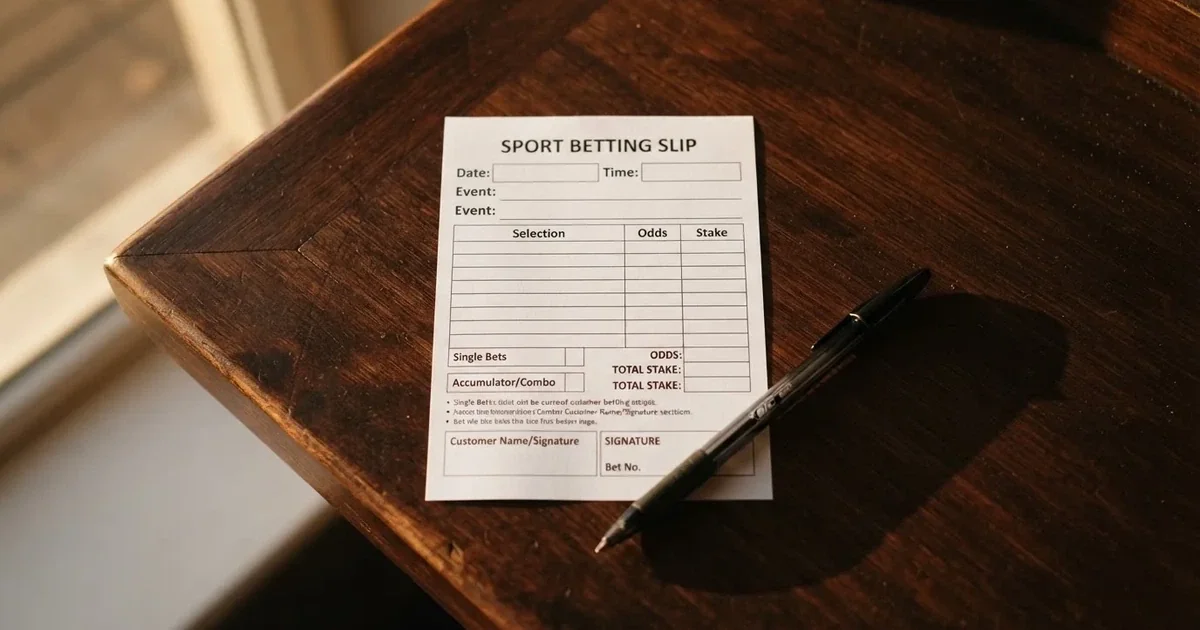
Current as of 26 October 2026. Cross-checked against the Racing Industry Act 2020 (section 74AAA, in force 28 June 2025), the Department of Internal Affairs public statements, and TAB NZ’s published terms.
Table of Contents
- How an arbitrage selection is built
- The Top 10 reviewed bookmakers for New Zealand
- What “arbitrage” actually is in a New Zealand context
- Where arbitrage betting sits under New Zealand law
- Responsible gambling around arbitrage betting
- Crypto, anonymity and the cross-border piece
- Strategy, predictions and the unsentimental version
- The arithmetic behind the bookmaker’s margin
- Reading the offshore landscape in 2026
- The practical answer for a New Zealand punter in 2026
- Frequently asked questions
How an arbitrage selection is built
A “sure bet” is not a sure thing in any everyday sense. It is a mathematical construction: a set of prices on every mutually exclusive outcome of one event whose implied probabilities sum to less than one. As soon as that holds, a stake on every outcome must return more than it cost, because the bookmakers together are promising more than a whole event is worth. One selection is Arsenal to win at 2.10 with one bookmaker and Arsenal’s opponent at 2.10 with another in a two-way match; another is home, draw, away at three different books. Two outcomes, three outcomes, six outcomes — the structure is the same each time.

The catch sits in how thin that edge is. A 2012 study by Franck, Verbeek and Nuesch found that 98% of the arbitrage opportunities they identified returned less than 1.2% of stake. One point two per cent is a margin hairdressers struggle to live on, and it is the average size of the supposedly “free” lunch in sports arbitrage. To extract a meaningful weekly payout from those margins a punter needs either a five-figure stake or thousands of small arbs a month — usually both.
Three pieces do the arithmetic. The implied probability from a decimal price is 1 ÷ odds. Sum the implied probabilities across every outcome you intend to back. If the total is below one, an arbitrage exists and the size of the edge is 1 − that total. Stake sizing then follows a single constraint: whatever you put down on each leg must pay out the same amount whichever outcome lands. The reader-facing calculator on most arb-finder sites solves that for you, and the maths is identical regardless of who made the site.
Two formats get confused in conversation. A bookmaker’s margin is the share of every dollar bet that the bookmaker keeps, on average across a market — a five per cent margin means a 95% payout share on that market in the long run. Payout share is the reciprocal. Neither is the same as the bookmaker’s “vig” on a single bet, and neither tells you whether one specific bet won or lost; both are properties of the population of bets at that price, not of the bet in your hand. The same market seen from two sides, not two different things.
Settling on a two-outcome example
Take an illustrative event with decimal prices of 1.90 and 1.90 on either side. The implied probabilities are 1 ÷ 1.90 = 0.5263 for each, summing to 1.0526 across both outcomes. That is 105.26% — the bookmakers together are claiming to pay out more than the event is worth, which means no arbitrage and a 5.26% margin baked into the market. A single punter betting on one side of that price pays the margin and may still win; nobody betting both sides locks in anything.

Shift one price to 2.05. The probability sum becomes 0.5263 + 0.4878 = 1.0141. Still above one, still no arb. Move it to 2.10 on one side and the sum drops to 0.5263 + 0.4762 = 1.0025 — almost flat, almost zero edge, almost certainly wiped out by the first cent of stake rounding. Real arbs exist at the borders of bookmaker pricing, not in round-number examples.
What the odds say about the market
A bigger edge in the odds is a smaller margin, not a bigger payout. When the implied probabilities sum to 0.985 the bookmakers are giving back, in aggregate, 98.5% of every dollar bet — a 1.5% margin, an edge of 1.5% on the arbitrage. When the sum is 0.97 the margin is 3% and the edge is 3%. The arbitrage’s edge and the bookmakers’ margin are the same number seen from opposite sides of the same counter.
A useful threshold to keep in mind: a sum of 1 across two prices means even money both ways with no juice; a sum of 1.05 across two prices is a 5% margin; a sum of 0.97 across two prices is an arb returning roughly 3% on stake. Punters chase the third case; operators price to avoid making it possible. The spread between what the market pays back and what it costs to run a market is the only number an arbitrage punter is actually harvesting.
The Top 10 reviewed bookmakers for New Zealand
There is no neutral list here. Two operators may lawfully take an online sports or racing bet from a person in New Zealand as of 28 June 2025: TAB and Betcha, both brands of TAB NZ. Every other operator on this page is offshore, not licensed in New Zealand, and outside the reach of the Department of Internal Affairs or any New Zealand complaints framework. Mixing the two groups and calling them ten “alternatives” is misleading. The licensed pair come first; the offshore brands follow with that label carried plainly.
| Brand | New Zealand status | What the operator’s own terms say on arbitrage |
|---|---|---|
| TAB | One of two lawful online brands of TAB NZ under section 74AAA of the Racing Industry Act 2020 | TAB NZ’s published terms treat arbing as outside the spirit of fixed-odds betting; account review and stake restriction are operator-level tools |
| Betcha | One of two lawful online brands of TAB NZ under section 74AAA of the Racing Industry Act 2020 | Betcha runs a daily Toolbox of boosts and insurance products and a Bet Social section; arbing is not described as a permitted activity |
| Glorion | Not licensed in New Zealand; no licence name that applies in New Zealand | The site lists no rule permitting or forbidding arbing; age 18 policy applies |
| BillyBets | Not licensed in New Zealand; no licence name that applies in New Zealand | Decimal, American and Fractional odds formats offered; cashback and reload on sports; arb terms not addressed |
| Roobet | Not licensed in New Zealand; Curaçao licence OGL/2024/687/0427, holder Raw Entertainment B.V. — gives no right to take bets from people in New Zealand | Crypto-first cashier; arb terms not addressed in the published pages consulted |
| 22Bet | Not licensed in New Zealand; Curaçao licence 8048/JAZ, holder TechSolutions Group N.V. — gives no right to take bets from people in New Zealand | Sportsbook takes singles, accumulators, systems and chains, plus live betting with real-time odds; arb terms not addressed |
| Rabona | Not licensed in New Zealand; Curaçao licence — gives no right to take bets from people in New Zealand | Soft2Bet-group sportsbook launched 23 December 2019; arb terms not addressed |
| Golden Panda | Not licensed in New Zealand; no licence name that applies in New Zealand | Dedicated Sports Terms and Conditions covering fixed odds, Combo Bets, Bet Builder, live scoreboards and stake and odds limits |
| BetNinja | Not licensed in New Zealand; Union of the Comoros licence — gives no right to take bets from people in New Zealand | Arb terms not addressed in the casino-fronted offering consulted |
| FunBet | Not licensed in New Zealand; no licence name that applies in New Zealand | Sportsbook covers football, ice hockey, American football, basketball, volleyball, tennis, rugby and baseball with live betting; arb terms not addressed |
TAB and Betcha are not rivals. They are the two online faces of the same operator, run for TAB NZ by Entain under a 25-year agreement signed in 2023 that gives Entain a 50/50 share of gross profits, with a $150m floor for TAB NZ in each of the first five years and a one-off $100m payment into the racing sector. Treating them as competing bookmakers misreads the structure of the market.
TAB — the monopoly’s flagship brand
TAB is the older of the two online brands. Its app, published under the seller name New Zealand Racing Board, has been live since 8 September 2014 and carries racing codes, sports and the same-game multi products punters meet on comparable offshore sites. The deposit limits, time-outs and self-exclusion tools sit inside the app rather than on a separate responsible-gambling microsite, and an exclusion applies across both TAB and Betcha — separate apps, same back end. For a New Zealand punter the practical meaning is that one exclusion request closes two front doors at once.
Worth knowing if an arb is on the table: TAB NZ’s terms treat fixed-odds betting as a contract governed by New Zealand law, with stake limits and account-level review as operator-side tools for managing suspicious activity. The house is not obliged to honour a pattern of bets that clearly targets its pricing in combination with another bookmaker. Punters expect stake caps on racing and sports selections rather than outright account closure as the first response.
Betcha — the new online face of TAB NZ
Betcha is the second online brand, launched as TAB NZ’s digital sister site. Its distinct shape comes from product: a daily Toolbox of odds boosts and insurance tools for bets that miss, a Bet Social section where punters chat, follow tipsters and share bets, and a Playbook with tips and match analysis. The product surface is heavier than TAB’s, and the audience skews younger and more recreational — closer in feel to a social-betting app than a tote counter.
For an arbitrage punter it is worth noting that Betcha’s feature set is built around engaging bettors with one brand, not bridging them to another. Insurance tools specifically pay out free bets on losing legs of a multi — a free bet whose stake is not paid back with a win — which leaves the operator’s margin unusually exposed to a bettor who treats the insurance token as one half of a two-book arb. That is precisely the kind of pattern operators tighten against fastest.
Glorion — offshore, no New Zealand licence
Glorion runs as a Curaçao-style brand with no New Zealand licence. Customer support is offered by live chat and email, and the site restricts its service to over-18s. New Zealand players who land here do so outside the protection of the Gambling Act 2003 and the Racing Industry Act 2020; there is no New Zealand complaints route and no harm-minimisation framework that reaches the brand.
Verdict: useful for what its Casino and sportsbook pages describe; useless as a hedge leg for a TAB or Betcha back. The site gives no published answer to whether arbing is tolerated, which usually means “no, and the first sign will be a stake cap”.
BillyBets — offshore, three odds formats
BillyBets is positioned for European and Latin American recreational players and accepts decimal, American and fractional odds formats. It runs cashback and reload bonuses on sports, a coin shop for collecting free bets and free spins through depositing, betting and tournament activity, and a five-tier VIP programme. None of that translates into anything a New Zealand punter can use as a hedge.
Verdict: the odds-format flexibility is a real feature for a multi-region user, and irrelevant for a New Zealand one. Offshore status erases any New Zealand protection, and the brand’s published pages don’t address arbing either way.
Roobet — Curaçao-licensed, crypto cashier
Roobet operates under Raw Entertainment B.V. with Curaçao licence OGL/2024/687/0427. The cashier is built around cryptocurrency, and that is the brand’s signature. It does not give the holder any right to take bets from people in New Zealand — the licence is granted by Curaçao and travels nowhere else. Players using a VPN to reach the site are still offshore in the eyes of New Zealand law.
Verdict: a legitimate operation for users inside its licensed footprint, with a strong crypto product. Outside that footprint the protection and the licence travel apart, and the brand’s terms do not address arbitrage behaviour in the version consulted.
22Bet — long-standing Curaçao sportsbook
22Bet runs a 2017-era sportsbook product under TechSolutions Group N.V. with Curaçao licence 8048/JAZ. The published offering covers singles, accumulators, systems and chains, plus live betting with real-time odds and score updates. Like Roobet, the Curaçao licence gives no right to take bets from people in New Zealand and the New Zealand complaints framework does not reach it.
Verdict: useful for what 22Bet sells elsewhere; the New Zealand punt it leaves behind is its own problem. The sportsbook product is mature enough to find, but the site’s published terms don’t reference arbitrage at all.
Rabona — Soft2Bet sportsbook
Rabona launched on 23 December 2019 as the sixth sportsbook in Soft2Bet’s portfolio. The brand carries a Curaçao licence, which gives it no standing in New Zealand. The product surface is conventional — prematch, live, a sport-by-sport navigation — and the brand has built its reputation on casino-heavy tournaments more than on arbitrage-friendly pricing.
Verdict: well-resourced Soft2Bet product, no New Zealand standing. A punter looking for arb counterparties will not find anything the site specifically invites.
Golden Panda — sportsbook with explicit fixed-odds rules
Golden Panda publishes a dedicated Sports Terms and Conditions page covering fixed-odds betting, Combo Bets, the Bet Builder feature, live scoreboards, broadcasts and stake and odds limits. That detail is welcome on its own terms — a sportsbook that publishes its own rules is rarer than it is — but the licence is not New Zealand and the brand is not authorised to serve New Zealand residents.
Verdict: the explicit fixed-odds rules are a real plus when reviewing the site on its own terms. They do not extend its standing in New Zealand, and the price it publishes is its own, not visible to TAB NZ.
BetNinja — Union of the Comoros licence
BetNinja is licensed by the Union of the Comoros for online gaming. Comoros licences are not recognised by the New Zealand regulator and do not authorise taking bets from New Zealand residents. The brand’s published pages, as consulted, are framed around casino products more than sports, and the sportsbook is positioned as a secondary vertical.
Verdict: a clear example of a brand whose licence has no reach in New Zealand. The product may be solid where it is licensed; it carries the same offshore caveats in New Zealand as every other brand on this side of the table.
FunBet — multi-sport offshore bookmaker
FunBet’s sportsbook covers football, ice hockey, American football, basketball, volleyball, tennis, rugby and baseball. Live betting and a 24/7 bookmaker are advertised. The site names no licence that applies to New Zealand. The product feels tailored for the European recreational market — football depth first — and the brand’s published terms do not address arbing.
Verdict: a thorough offshore sportsbook for users inside its licensed footprint. For a New Zealand punter looking for a hedge leg to TAB NZ or Betcha, the protection gap is the binding constraint, not the market depth.
What “arbitrage” actually is in a New Zealand context
Strip the marketing and arbitrage is one word for the consequence of two bookmakers having different opinions on the same event. The price of an Arsenal win at 2.10 with one bookmaker and 2.20 with another is a disagreement that one bettor can monetise. Without the disagreement there is no opportunity; with it, the edge is small.
New Zealand’s market in 2026 has narrowed that disagreement to a single source. TAB NZ is the only lawful provider of online racing and sports betting to people in New Zealand, so the only way to source an arbitrage inside the law is across TAB’s two brands. Across two books with one owner does not produce independent pricing in any meaningful sense: TAB NZ and Betcha are run together by Entain, and the prices on both brands are correlated by design. A punter running an arb across TAB and Betcha is betting against the same bookmaker twice, and the operator can see that.
That is what arbitrage has come to mean in New Zealand in 2026. The cross-bookmaker textbook definition still exists; the cross-operator practice no longer fits the available market. Offshore brands offer independent pricing but break New Zealand law at the operator level.
The textbook setup
Three features define a textbook arbitrage. The first is mutually exclusive outcomes: every outcome priced is a separate possible result, and only one can land. The second is a probability sum under one: the implied probabilities of every leg, calculated as 1 ÷ decimal odds, must add up to less than a whole event. The third is a deterministic return: a stake plan exists that pays the same amount whichever outcome is registered as the winner.
Mutually exclusive outcomes are obvious in a head-to-head match or a win market on one race. They are less obvious in player props, season totals, or tournament outrights, where “draw” is not in the set or where the bookmaker settles voided legs by refunding the stake rather than paying out. A multi-leg accumulator is not, in itself, an arbitrage vehicle — its outcomes are not mutually exclusive, and the losing-case return is zero. Insurance tools that refund a stake on a losing leg convert the multi into something closer to an arb candidate, but only for the leg that refunds, and only at the price the insurer has priced.
What a Franck-Verbeek-Nuesch edge looks like in cash
A 1.2% edge on a $5,000 stake is $60 before fees and before any commission-style haircut a bookmaker might apply on a winning bet. That is the kind of number a serious arber calls a working day. The same edge on a $500 stake is $6; on $5,000 every day for a working month it is roughly $1,300 before the operator’s reaction. To make $1,300 a month sustainable the punter needs both a large bankroll and a bookmaker willing to keep taking the size. The market’s reactivity makes both harder than the maths suggests.
Why bookmakers do not love arbers
Bookmakers make their margin on the average punter across a market. An arber takes only the prices where the bookmaker is wrong — which is also where the bookmaker is paying out more than it aims to. A single sharp arber does not move the line by themselves; ten of them on the same event can. Operators react by tightening the odds on markets with arber flow, capping stakes on selections that fit the arb pattern, and closing accounts that treat the bookmaker as a price source rather than a counterparty.
The reaction is not theoretical. Maximum wager limits on flagged accounts drop sharply, and operators have been known to cancel an unmatched half of an arb bet or close the account after a pattern was identified. New Zealand regulators do not endorse the practice and offshore operators are not shy about enforcing their right to manage their own risk.
Where arbitrage betting sits under New Zealand law
Section 74AAA of the Racing Industry Act 2020, inserted by the Racing Industry Amendment Act 2025 and in force since 28 June 2025, says no person other than TAB NZ may offer racing betting, sports betting or other racing or sports betting to a person in New Zealand. The Department of Internal Affairs, which enforces the prohibition, told providers serving New Zealand to withdraw with immediate effect. There is no second licence to apply for and no bookmaker register because there is only one lawful operator.
What that means on the ground
For an operator: offering racing or sports bets from outside New Zealand to a person in New Zealand is unlawful. The penalty for breaching section 74AAA is not stated in the section itself and no prosecution of an offshore bookmaker was found in the public record. The law does not geo-block the websites themselves, so the player can still reach them — the liability sits with the operator, not the network.
For a punter: section 19(4) of the Gambling Act 2003, inserted in 2025, says an individual cannot be convicted for placing a bet with an offshore operator that breaches section 74AAA. No source states any other penalty for the player. The safe framing is the realistic one: the operator is the target, the regulator warns players of the risks (unspent credits may not be returned, large wins may not be paid out, no New Zealand complaints route), and the punter is asked to weigh the offshore offer against the absence of New Zealand protection.
Racing codes and the closing greyhound window
Racing in New Zealand covers thoroughbred, harness (trots) and greyhounds. Greyhound racing closes in stages from 1 August 2026, and from that date offshore operators may not take bets on greyhound races either. Thoroughbred and harness continue as before through TAB NZ and Betcha. A bet placed before 1 August on a greyhound race that closes after that date is subject to the operator-level rules of the book taking the bet, not to a statutory change.
Help, support and the framework around betting
The Gambling Act 2003 and the Racing Industry Act 2020 share the harm-minimisation brief. TAB NZ’s accounts need a verified New Zealand address and ID. Inside the app the safer-gambling tools are deposit limits, time-outs and self-exclusion; the helpline is 0800 654 655 and the text line is 8006, both free and run by Safer Gambling Aotearoa. The age for TAB NZ betting is 18, set by section 89 of the Racing Industry Act 2020 — land-based casinos are 20, and the two ages are not interchangeable.
The Problem Gambling Levy, at 0.74% of betting revenue and in force from 1 July 2025 to 30 June 2028, funds those services. Offshore operators do not pay it on New Zealand-derived revenue. The levy is not a tax the punter sees; it sits between operator and regulator.
Responsible gambling around arbitrage betting
The subject of this page is a math-driven hunt for small edges across many bets. Responsible-gambling support is not beside that subject; it sits inside it. Arbitrage betting is associated with high-volume betting — the kind of activity that, even when it pays, also runs into the limits, stake restrictions and account closures that bookmakers apply to anyone betting in patterns the operator does not like.
Self-exclusion in New Zealand
Self-exclusion at TAB NZ and Betcha is app-based and spans both brands — one request, two front doors closed. There is no single national online-betting exclusion register: the register the Online Casino Gambling Act 2026 will require is for online casinos only, not sports or racing. A punter who excludes from TAB and Betcha does not exclude from offshore brands, which is why self-exclusion is one tool rather than a complete safeguard.
Helpline and text line
The free Gambling Helpline is 0800 654 655, with a text service on 8006, run by Safer Gambling Aotearoa. The lines are free, confidential, and available to anyone concerned about their own betting or someone else’s. The published page for the helpline is the recommended first stop, before any account-based tool, when a punter wants to talk the pattern through.
Deposit caps, time-outs and the volume problem
Deposit caps and time-outs inside the TAB NZ app are the most useful day-to-day tools for a high-volume punter. A deposit cap makes the bankroll finite from the inside; a time-out creates a circuit breaker between heavy sessions. Neither tool fits a high-volume arber’s working day, which is the point — the tools are there for when a punter decides the working day is the problem, not the answer.
For offshore brands the tools are the brand’s own, sometimes as limited as a session reminder, sometimes none at all. There is no New Zealand obligation on an offshore operator to provide New Zealand harm-minimisation tools, and there is no regulator that can force one to.
Crypto, anonymity and the cross-border piece
An arbitrage punter in a single-market jurisdiction ends up reading crypto terms quickly. The motivation is straightforward: if your bank or card will not process a deposit to the bookmaker you want to use, an asset the bank does not recognise is one option among several. Crypto also appeals because it travels across borders without the obvious exchange-control marks, and because it is pseudonymous on its own ledger.
What the regulators say
New Zealand has no published statement that crypto deposits are forbidden on TAB NZ accounts; TAB NZ’s deposit methods and limits are operator-level terms and not a regulator-set list. Nothing in the public record states a rule on crypto or VPN use for betting in New Zealand. Account opening at TAB NZ still requires a verified New Zealand address and ID, which limits the reach of crypto-funded accounts into the licensed brand.
For offshore brands, a Curaçao licence gives no right to take bets from people in New Zealand regardless of how the stake travels. The asset is pseudonymous; the operator’s status under New Zealand law is not.
What “anonymity” actually gets a punter
Anonymity is rarely the same as invisibility. Crypto on a public ledger is traceable by design; what it buys the user is the absence of an automatic paper trail back to a personal bank account. That is enough for some users and not enough for others — and the offshore operator’s own customer checks still apply, especially for withdrawals where large sums go back out.
For a New Zealand punter specifically, anonymity is a smaller asset than it looks. The licensed option, TAB NZ, requires a verified address and ID. The offshore options are reached outside the New Zealand regulatory frame and offer harm-minimisation tools that are operator-set rather than regulator-set. Crypto does not change that geometry.
Strategy, predictions and the unsentimental version
Arbitrage literature online reads like an extension of stock-picking: systems, alerts, bankroll plans, profit-and-loss diaries. Strip the language back and most of what the sites describe is the same arithmetic this page opens with, plus a price-feed subscription that pulls odds from many books at once. The system is the algorithm; the punter is the operator of the algorithm.
Predicting tomorrow’s “sure bets”
No source can predict which bookmaker will misprice which event tomorrow, because no bookmaker publishes its model in advance. Arb services that claim otherwise are running a feed and an alert system against the same price sources everyone else has — what makes them profitable is speed and bankroll, not prediction. A punter paying for tomorrow’s “sure bets” is paying for the alert system, not the picks.
Bankroll discipline
Bankroll discipline is what separates a working arber from a frustrated one. Two rules hold across the practitioner literature. First, the bankroll is a fixed percentage of net worth the punter can afford to lose in full — not a sum the punter hopes to grow. Second, the bet sizing on each leg is sized to deliver the same return whichever outcome lands, and is set against the bankroll rather than against the day’s expectation. Both rules are easier to read than to write.
A bankroll set at 1.2% of $5,000 is $60 to risk across all open arbs; the punter places $30 on each leg of a two-outcome arb and waits. When one leg wins, the return is $63 — back to roughly the starting bankroll, with the day’s $3 won. When the arber misreads a price and one leg does not cover the other, the loss is the small edge missed. The maths is unsentimental: most days are small wins, the occasional day is a stake-cap or an account flag, and the bankroll is what carries the punter between the two.
Why the system still fails
Three failure modes show up across the practitioner accounts, and none of them is a margin calculation. The first is the limit trap: the arber prices a 2% edge, sizes the stake correctly, and finds that one bookmaker has cut his maximum on that selection to one tenth of what was planned. The second is the void trap: the book voids one leg because of a withdrawn player, while the other leg stands — the “arb” was real on paper and zero after the void. The third is the close trap: the winning bookmaker closes the account before the withdrawal clears, and the funds are held through a verification process the punter cannot force.
All three are mundane. None of them shows up in a price alert. All of them are part of what an arbitrage punter is buying when the maths says the bet is worth taking.
The arithmetic behind the bookmaker’s margin
A two-way market at decimal prices of 1.90 and 1.90 is a useful worked example because both sides are the same and the rounding is gentle. The implied probability on each side is 1 ÷ 1.90 = 0.5263. Two sides sum to 0.5263 × 2 = 1.0526, which is 105.26% — the price paid back across both outcomes is more than a whole event, and the book’s margin is the excess: 5.26%.
That is the book’s take on every dollar bet into that market, in the long run, across all bets at that price. Punters betting both sides of a 5.26% market lose 5.26% of stake; punters betting one side alone may win or lose but on average pay the same 5.26%. Move one price to 2.05 and the implied probability becomes 0.4878, the sum becomes 0.5263 + 0.4878 = 1.0141, and the margin drops to 1.41% — closer to fair but still not an arb. Markets with margins below 2% are where arbs are most likely to exist; markets with margins above 8% are typical of recreational brands where the margin is the business model.
The same formula in reverse gives a payout share: a 5% margin across a market means the book returns 95% of the betting volume to punters over the long run. Either number tells the same story; one is the house’s share, one is the punter’s. The edge an arb punter captures is the difference between the margin and zero — at 0.985 probability sum the margin is 1.5% and the arb captures 1.5% per turnover; at 0.97 probability sum the margin is 3% and the arb captures 3% per turnover.
Reading the offshore landscape in 2026
For a punter comparing the two licensed New Zealand brands against the eight offshore options, three dimensions matter most. The first is licence reach — TAB and Betcha are the only two with standing in New Zealand; the offshore eight carry Curaçao, Comoros or no licence relevant here. The second is recourse — under TAB and Betcha the New Zealand complaints framework applies; under the offshore eight there is no New Zealand complaints route and the operator’s own terms govern disputes. The third is harm-minimisation — TAB NZ provides deposit limits, time-outs and self-exclusion across both brands; the offshore brands offer whatever the operator decides, and the regulator cannot add to it.
Why the choice often comes down to one question
The right product is not always the lawful one. A punter who wants a deep season-long outright market for English Premier League football may not find it on TAB NZ; an offshore bookmaker with a global pricing feed will. The choice is between “the product is here, and the protection is in New Zealand” and “the product is wider, and the protection is the operator’s own terms”. A punter who cares about the regulator’s read on a dispute defaults to TAB NZ; a punter who cares about market depth at least looks offshore with eyes open.
A short checklist for an offshore brand
Three questions surface as the most useful for an offshore brand. What licence does the operator name, and which authority grants it? Does the operator publish sports terms and conditions that cover fixed odds, stake limits and bonus bet settlement? What is the operator’s policy on stake limits, account review and the patterns of betting it treats as suspicious? An arber-friendly brand answers the third with a clear stake ceiling and a clear stake-cut policy; an arber-resistant brand answers it with a vague “we may limit” clause and a closed-account precedent that never made it to press.
The practical answer for a New Zealand punter in 2026
If the question is whether arbitrage betting “works” — the maths is real, the edge is small, the operational risk is large. The 2012 study’s figure still holds in the practitioner literature: most arbs return under 1.2% on stake, and the bulk of an arber’s annual return comes from being able to deploy capital fast enough to make those small edges compound.
If the question is whether it works in New Zealand in 2026 — only across the two TAB NZ brands, which are one operator and price independently mostly in name, and across offshore books whose standing under New Zealand law is not what the marketing suggests. The same maths that works in a deep market works here on a thinner shelf, and the shelf is partly empty by statute.
If the question is whether to do it — that is the question this page cannot answer. The maths says it can be done; the regulator says it is not done by licensed operators competing across brands; the bankroll says it takes a sum many readers will not have. Treat the rest of this page as description, not as a recommendation to act.
Frequently asked questions
Does sports arbitrage betting work?
Yes, mathematically. When the implied probabilities of every mutually exclusive outcome of one event sum to less than one, a stake plan exists that pays the same return whichever result is registered. The edge is real, and a 2012 study (Franck, Verbeek and Nuesch) found that 98% of arbitrage opportunities return less than 1.2% of stake. Bookmakers also detect patterns quickly and may cap stakes, cancel unmatched legs or close the account.
How do you place an arbitrage bet?
The formula is: implied probability = 1 ÷ decimal odds. If the sum across all outcomes is less than one, an arb exists, and the stake on each leg is set so the same amount is returned whichever outcome lands. Most arbers use a calculator or an alert service that solves the stake sizing for them. The edge, where one exists, is small — typically under 1.2% on stake for the average opportunity.
Which bookmaker may lawfully take sports and racing bets in New Zealand?
TAB NZ does, through two online brands: TAB and Betcha. Section 74AAA of the Racing Industry Act 2020, inserted by the Racing Industry Amendment Act 2025 and in force since 28 June 2025, prohibits any other person from offering racing betting, sports betting or other racing or sports betting to a person in New Zealand. The Department of Internal Affairs told providers serving New Zealand to withdraw with immediate effect.
How is the return on a bet worked out from the stake and the odds?
A decimal price multiplied by the stake is the total returned — including the stake itself — when the selection wins. The profit, separate from the stake, is the stake multiplied by (odds − 1). On a $10 bet at 2.50 the total returned is $25 and the profit is $15. On a stake-not-returned free bet the same odds apply to the free-bet value for the profit calculation only.
What is the bookmaker’s margin and how can it be seen in the odds?
The margin is the share of every dollar bet that the bookmaker keeps on average, and it is calculated by summing the implied probabilities of every outcome in a market. If the implied probabilities sum to 1.05 the margin is 5%; if they sum to 1.02 the margin is 2%. A payout share of 95% on a market is the same market described from the punter’s side — the two numbers add to one.
Written by the editors at Nzlivebetting.